Introduction
We are the Emerging Indigenous Leaders — a collective of Indigenous post-secondary students, practitioners, and community partners working to transform how “quality” is understood in the built environment. Our work began within the Quality in the Built Environment (QBE) partnership, but it grew from a deeper truth: Indigenous Peoples have always been the original designers, builders, and vision keepers of place.
Across Turtle Island, our Nations continue to face housing crises, unsafe infrastructure, and education systems that force our youth to leave home to succeed. As Chief Darryl Wastesicoot reminds us, education is in a state of emergency. Healing begins when education returns to our lands — when we train our own builders, educators, and leaders within our Nations.
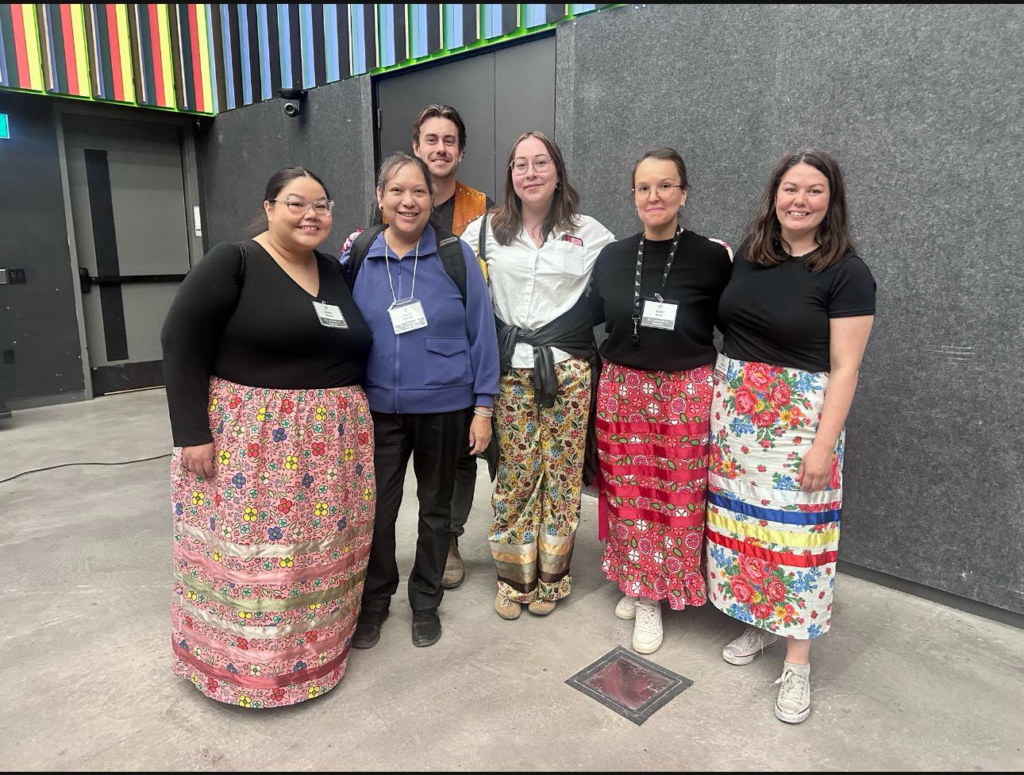
Our Evolution
EIL was not planned — it emerged.
What began as a single Indigenous student panel at the 2022 Montreal Convention became a circle of connection, story, and shared purpose. At first, we gathered simply to be seen. By the 2023 Calgary and 2024 Halifax conventions, our presence had grown into collective advocacy — youth art, research, and lived experience reframing what “quality” means: ceremony, kinship, safety, and belonging.
By 2025, our voices converged into the Red Paper: Indigenous Pathways to Leadership in the Built Environment, a national framework born from lived experience. At its heart is a cycle we call Root, Grow, Return:
- Root learning in community and land.
- Grow through mentorship, collaboration, and Two-Eyed Seeing.
- Return knowledge home, strengthening Nations through education and built environment design.
This is how we evolved — from visibility to voice, from representation to responsibility.
We are no longer asking to be included. We are building systems led by Indigenous emerging leaders and guided by the teachings of those who came before us and those who are currently doing the work.
Our Vision
We carry forward the words of late Honourable Senator Murray Sinclair and Chief Darryl Wastesicoot: Education got us into this mess, and education will get us out — but it has to be our kind of education.
Grounded in Etuaptmumk (Two-Eyed Seeing), our work bridges Indigenous and Western knowledge to restore balance in how quality is defined and practiced. Our vision is not reform — it is restoration. We are rebuilding education, housing, and built environment design from within our communities, ensuring every learner can root, grow, and return home.
This is the work of the Emerging Indigenous Leaders.
This is how we bring education home.
Objectives
- Advance systemic change: Link Indigenous-led education with the right to live in safe, dignified, and culturally grounded homes.
- Bridge knowledge systems: Integrate Indigenous lived experience, values, and knowledge into how “quality” is defined and measured.
- Empower youth: Create pathways for Indigenous youth to influence housing, education, and policy through research and practice.
- Amplify leaders: Support the Indigenous practitioners and knowledge keepers who have led this work for generations.
- Shift narratives: Expose colonial legacies in housing and highlight community-driven innovation.
Guiding Research Questions
- How can Indigenous-led education redefine “quality” in the built environment?
- What does it mean to bring education home through locally delivered, Nation-based programs?
- How can institutions become culturally safe, accessible, and accountable to Indigenous communities?
- How can Indigenous knowledge reshape architectural and design standards rooted in place and relationship?
- How can Two-Eyed Seeing guide collaboration between Indigenous and Western approaches?
- How can EIL strengthen intergenerational pathways for Indigenous youth leadership in education and design?
Who Are We
Jory Thomas-Blanchard, Red River Michif, Bachelor of Environmental Design Student, University of Manitoba
Kevin Kremer, CPA, CA, M.Arch Métis Nation of Alberta, District 6
Maisie Berens, B.EnvD, MID Candidate Anishinaabe, Member of Berens River First Nation
Naïla Rose, B.Arch, Université de Montréal, Cree Attawapiskat First Nation
Twylla Soosay, B.Ed. (Secondary), M.Sc. Candidate in Computer and Information Systems, Samson Cree First Nation, Treaty 6
Trishtina Godoy-Contois, Métis Nation of Alberta, Treaty 7, Indigenous Research Coordinator, B.Arts Political Economics student
Chief Darryl Wastesicoot, York Factory First Nation
Heather Walkus, Chair of Council of Canadians with Disabilities (CCD)
Skye Gillson, Architectural Designer, Navajo Nation
Trina Moyan, Nêhiyawak Nation, Owner and Partner of Bell and Bernard Ltd., Indigenous Engagement and Consultation, Advisor & Educator of First Peoples Advisory Office, John H. Daniels Faculty of Architecture

Member of Berens River First Nation
MID Candidate Anishinaabe
Maisie Berens
Red River Michif
Bachelor of Environmental Design Student, University of Manitoba
Jory Thomas-Blanchard
Cree Attawapiskat First Nation
B.Arch, Université de Montréal
Naïla Rose
Samson Cree First Nation, Treaty 6
B.Ed. (Secondary), M.Sc. Candidate in Computer and Information Systems
Twylla Soosay
York Factory First Nation
Chief Darryl Wastesicoot
Nêhiyawak Nation
Indigenous Engagement and Consultation, University of Toronto
Trina Moyan
Chair of Council of Canadians with Disabilities (CCD)
Heather Walkus
Navajo Nation
Architectural Designer
Skye GillsonIndigenous Contributions to the Quality in the Built Environment Research Partnership
The contributions of Indigenous partners are essential to any reflection and action plan that could lead to improving quality in terms of greater equity, social value, and sustainability.
The growing involvement of Indigenous voices in our partnership approach confirms that any conversation about the built environment in Canada must begin by including Indigenous voices and ways of knowing. Today, we celebrate all efforts to implement the practice of “Two-Eyed Vision” (ETUAPTMUMK), which—as Mi’kmaq elder Albert Marshall has clearly demonstrated—encourages a strong and sincere connection between Indigenous and Western modes of knowledge for beneficial results.
Through several initiatives, including the establishment of a new group of “Emerging Indigenous Leaders (EIL),” our partnership seeks to create a space for Indigenous youth to share their perspectives and projects to guide our work. We are deeply grateful to them for their openness and for the trust they have placed in all the cross-sector teams across Canada.
By listening and learning, we recognize the history of the territories where we live and work. We recognize that the lands we inhabit have been shaped by generations of Indigenous practices that respect the natural environment.
We would like to express our deep gratitude to Indigenous elders, knowledge keepers, youth, and community representatives who share their time, perspectives, cultures, and knowledge with us.
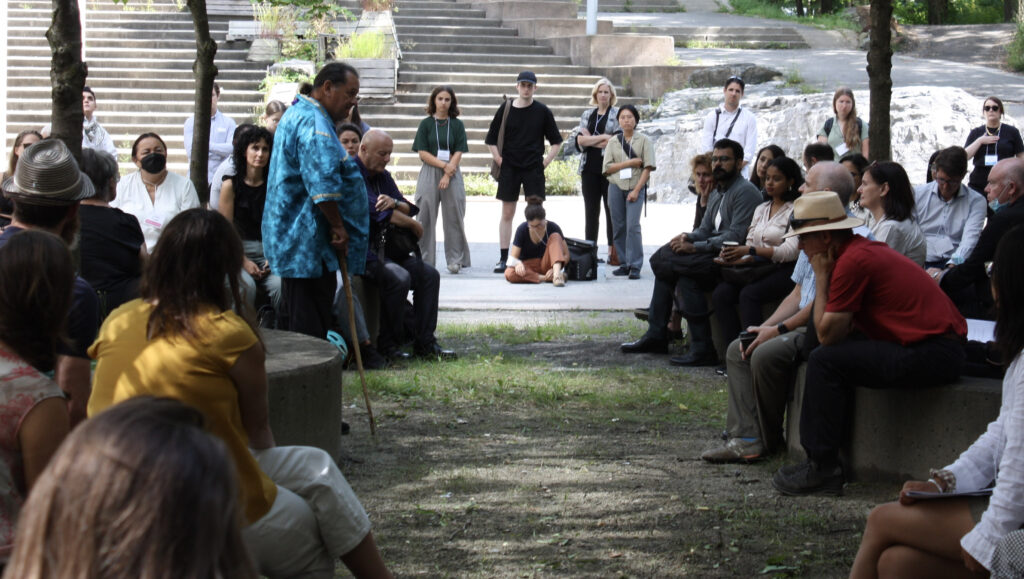
Opening ceremony of the Montreal Convention on Thursday, August 24, 2022. Mr. Charles Otsi’tsakèn:ra Patton and Mrs. Niioie:ren Patton offered words of gratitude welcoming the participants.
Mr. Otsi’tsakèn:ra, Elder of the Haudenosaunee (Iroquois) people delivered a welcoming prayer and then explained:
“When people come together, no matter what the occasion, the Elders of the Haudenosaunee (Iroquois) people taught us that we must first honour the forces that give us life and that will also ensure our future.
This ceremony has been going on since the beginning of time. Its purpose is to remind all who participate to remember to be grateful…”
The links below refer to milestones in our shared journey since 2022:
2022: The Montreal Convention in August 2022 is launched and blessed by Indigenous elders:
5 / 6
2023: Research ethics in a podcast by Josie C. Auger (Kikapekiskewin):
2023: Professor McAdam reflects on the “curse of the Indian Act and First Nations housing”:
2023: Student Perspectives on Quality: Indigenous Art and Student Photographs:
2023: Craig Blacksmith, Dakota Oyate Knowledge Keeper, summarizes barriers to quality housing in Indian affairs and on-reserve housing:
2023: Wanda Dalla Costa, a member of the Saddle Lake Cree Nation, discusses the vision of ecological transition and new methods for strengthening our connection to place:
2024: The Calgary site welcomes new partners and secures funding for Indigenous participation:
2024: Laurentian University presents a study program with the Indigenous community:
6 / 6
2024: Halifax Convention: Meeting on Indigenous ways of knowing and creating places. (Josie C. Auger + Trishtina Godoy-Contois) with representatives from: York Factory First Nation, Red River Métis, Big River First Nation, Attawapiskat First Nation, Berens River First Nation, Albert Metis Region 5, Coral Harbour Nunavut.
2025: Partners in Winnipeg, Sudbury, and Vancouver are actively working to understand the needs of Indigenous communities in the built environment:
2025: Skye Gillson, member of the Navajo Nation, architect at Childers Architects (Phoenix, USA), is one of the 6 members of our new International Advisory Panel: