New SSHRC (INSIGHT)-funded research aims to better understand and address the lack of accessibility in buildings and public spaces in the Canadian context
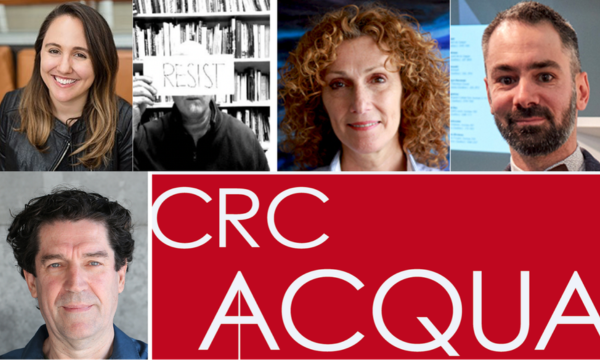
Coordinated by the Canada Research Chair in Architecture, Competition, and Quality at the Université de Montréal (Prof. Jean-Pierre Chupin), this project has received $412,000 in funding from SSHRC’s INSIGHT program (2026–2031). The interdisciplinary approach will be led by researchers in interior design at the University of Montreal (Dr. Oliver Vallerand, Prof. Carmela Cucuzzella), in landscape architecture at the University of Toronto (Prof. Rob M. Wright), and in urban planning at Toronto Metropolitan University (Dr. Samantha Biglieri).
Social Sciences and Humanities Research Council of Canada INSIGHT grant : Public Exclusions: Understanding and Addressing the Inaccessibility of Public Buildings and Places in the Canadian Context
Abstract
It is now foreseeable that not all public buildings will be accessible by 2040, despite the adoption of the Canadian Accessibility Act (S.C. 2019, c. 10). By perpetuating barriers that effectively exclude people with disabilities, these spaces cannot fulfill their “public” role.
In contrast to progress made in environmental and sustainability fields, the lack of understanding of the spatial implications of experiences related to disabilities and special needs remains a major obstacle to educational, practical, and policy responses across all disciplines of the built environment. Our previous research has demonstrated how awards of excellence and competitions influence definitions of quality in architecture, interior design, landscape architecture, and urban planning. We hypothesize that competitions and awards still reflect cultural and behavioral biases and do not support the requirements of the Accessibility Act. Representations of users remain rooted in a worldview where the human body is not only idealized but normalized through simplistic images from which neurodiversity is conspicuously absent. We propose to make these ideological and procedural barriers explicit by theorizing them through a series of comparative analyses of competition entries and awards of excellence in the Canadian context.
Using two databases compiled by our team (Canadian Competitions Catalog and ArchiQualiData), we will address two main questions:
1 – How have criteria of “exclusive quality” been maintained by default in professional discourse, in design competitions, and in awards of excellence over the past decade, while the Accessibility for Canadians Act was being drafted?
2 – How might design and project evaluation balance the significance of forms, normative constraints, and spatial justice to achieve “inclusive quality”?
Drawing from a preliminary corpus of 120 design competitions and an equal number of winning entries, we will focus on approximately forty cases identified in Canadian institutions, such as cultural buildings, libraries, sports centers, public schools, public parks, and civic centers. These cases raise accessibility issues to varying degrees, even though they meet current norms and standards. The research involves a qualitative comparative analysis of the projects and theoretical frameworks, as well as an inventory of educational approaches and gaps, and the collection of lived experiences from a reference group. We will compare sets of award-winning buildings by decoding the judging criteria and deconstructing the design principles, while gathering testimonials and accounts of experiences from design teams and people with disabilities. Based on these analyses, we will develop exemplary roadmaps and accessibility plans, addressing normative, theoretical, and procedural barriers.
- Axis 1 (Policies) – The issue of accessibility standards as benchmarks for access (Coordinated by Jean-Pierre Chupin and Samantha Biglieri)
- Axis 2 (Theories) – Rethinking representations and concepts of accessibility through the lens of inclusive quality (Coordinated by Olivier Vallerand and Jean-Pierre Chupin)
- Axis 3 (Methods) – Improving methods for evaluating and measuring inclusive quality through lived experience. (Coordinated by Samantha Biglieri and Olivier Vallerand)
- Axis 4 (Pedagogies) – Awareness-raising and academic training on behavioral barriers and the social value of barrier-free environments (Coordinated by Professors Carmela Cucuzzella and Rob Wright)
To address this complex phenomenon, the team combines multidisciplinary expertise in the fields of architectural theory, design thinking, gender studies, urban planning, and landscape research. Our team has gained international recognition for its work on competitions and awards of excellence. Two grants from the Canada Foundation for Innovation have enabled the establishment of digital documentation infrastructure that will facilitate the comparative and qualitative cross-referencing of specialized data available through open access.
This study aims to contribute to a better understanding of the limitations of norms, standards, and policies related to accessibility, calling for increased awareness in the education of designers, in the training of public procurement officials, and, more generally, in the training of competition and award jury members across all fields of the built environment.